As we step into the new year, many of us carry the weight of rising costs, economic uncertainties and personal pressures. These challenges don't remain outside the workplace; they walk in with us each day and we are faced with how to navigate overwhelm.
I've noticed this firsthand in my recent coaching sessions. Despite having some downtime over the holidays, many of my clients have jumped straight back into the grind. Instead of easing into the year, they're displaying a mix of excitement and stress behaviors, with urgency and anxiety running high. It's as if there's no time to pause, organize, or gain clarity before diving back in.
This observation underscores a critical point: as leaders, we must balance supporting our teams with caring for ourselves. Let's explore how we can navigate both.
When external pressures mount, leaders have a unique opportunity to create stability and connection within their teams. Here are three actionable ways to support your team during challenging times:
Supporting your team is crucial, but you can't pour from an empty cup. Leaders face their pressures, which can lead to frustration, disengagement, or even burnout when these go unaddressed. Korn Ferry's recent article on the rise of Cranky Boss Syndrome highlights this growing trend among leaders.
Here are three strategies for self-care and personal growth:
When leaders invest in themselves and their teams, the ripple effects are transformative. Teams become more connected, aligned and motivated. Leaders, in turn, feel more equipped to handle challenges without succumbing to overwhelm.
This isn't about striving for perfection—it's about showing up with intention. Your ability to manage stress and lead with empathy can make all the difference in how your team navigates difficult times. While external stressors may not disappear overnight, the culture you create can provide a sense of stability and purpose that helps your team thrive.
You don't have to do it alone if you're navigating the challenges of leading through stress and overwhelm. Executive coaching can help you stay grounded, maintain a growth mindset, and lead your team with clarity and heart. Learn more about my coaching services and explore how coaching can support you on this journey.
After over a year of working from home, avoiding family gatherings, and checking in with friends and coworkers over Zoom, we’re exhausted. We haven’t hugged our loved ones or spent quality time with our friends or colleagues in person. The mental, emotional, and physical toll of our collective isolation is significant. But we have also discovered that we are more resilient than many of us even thought possible.
We have created a new integrated life, where work and home became a unique blend for many of us. We’ve discovered unexpected blessings, new priorities, and positive experiences amidst the chaos of pandemic life.
It is now time to decide what served us and be deliberate and intentional about what we carry forward into the next normal.
I often hear from my clients, friends and family that they are anxious to "go back to normal." The truth is, we can’t ever go back. Things have fundamentally changed: in public spaces, work environments, and social settings. There will be no “going back to normal” at any point.
But this isn’t as dire as it sounds. In fact, I believe we all have a rare chance to live life with great intention, as we move into the next “normal.”
We shouldn’t want to go back. Remember that hamster wheel of life that was constantly spinning – late nights at the office, over-committed calendars, making time for everyone but ourselves? We have had a year (or more) to adjust and leave much of that life behind, and if we are intentional about moving forward, we can avoid ever falling back into those toxic patterns.
Despite the stress and disruption of a year-plus of COVID-restricted life, there are a whole host of positive things we can bring with us into our next normal. The key is in taking time to reflect on what we have learned about ourselves and truly come to appreciate since March 2020.
Living life with intention as we move forward is the only way to avoid falling back into bad habits. It took us over two months to adjust to social distancing and COVID restrictions, but we can fall back into our “old normal” way of life in as little as two weeks if we aren’t diligent.
Examine your life now:
Once you are aware of these shifts and the positive things you would like to keep, you can take steps to ensuring they remain part of your life.
You have reflected on your life since March 2020 and identified the changes, routines, and expectations you’d like to keep. Maybe this looks like closing your laptop at 4:30 and spending half-an-hour with your kids before you start dinner prep. Maybe it means keeping your morning walk. Or maybe you’ve fallen in love with having small blocks of unscheduled time in your week that you want to protect!
Learning to set boundaries will help you protect the things that serve you.
Boundaries are limits we set with others that establish what behaviors we will allow and what we will not. Setting healthy boundaries can feel uncomfortable if you’ve never really used them before, but boundaries actually help us enjoy our relationships and avoid stress, anger, and conflict.
We can’t ever go back to life before COVID, but we can create boundaries to protect the things we have gained and come to appreciate since experiencing quarantine, social distancing, and COVID restrictions. You owe it to yourself to move into the next normal as strong, healthy, and balanced as possible.
I know that learning how to set boundaries can be challenging, which is why I created this helpful resource designed to help you determine your personal standards and then set healthy boundaries to protect those standards.
I invite you to download this resource and spend some time working through it. You’ll be amazed at how your healthy boundaries will help you create and protect a life that serves you and your highest values.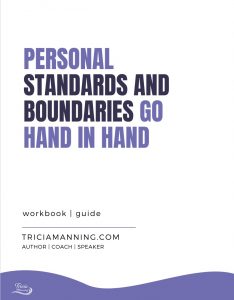
The United States is in a state of emergency due to the COVID-19 pandemic. If your organization wasn’t already crisis planning, they certainly are now.
For the past year, I have been watching the “message from our CEO” emails, the social posts, the news (now that is enough to scare anyone!) and can’t stop thinking about how much we learn about people during times like this…how much we learn about our leaders.
There is no doubt that the impacts of this situation are far-reaching as organizations pull back spending, freeze travel, update work-from-home policies and look to protect the health and safety of their employees and customers.
It is the right thing to do. Some leaders have managed their organizations through crisis before and for others, they lack the experience.
I have experienced it before, and I am seeing it with my clients now. It is times like this when intentional leadership is needed most.
Show up with a sense of responsibility and commitment to your organization and role model the behavior you want people to follow.
Engage personally with people, listen to their fears, and communicate openly and transparently. Acknowledge the challenge and help people know that you have their best interest at heart.
Most crises come on quickly and it is critical to jump into planning, make swift decisions, move people to action, address the external constituents.
But it is also critical to take a breath and think through the plan to lead your people through the situation.
Here are four things you can do as an Intentional Leader. Show up as your best self and as the leader your employees need you to be:
The worst thing you can do is overreact which brings fear, panic, and self-interest into the picture. All eyes are on you so maintain self-control by projecting a sense of calm.
Don’t minimize the situation as you can come off as inauthentic but use facts (not fear) to balance the reality of the situation with the emotions of the people.
In absence of information, people fill in the blanks. Be visible and explain the steps being taken. Be transparent, clear, and timely in sharing information.
Recognize the fluidity of the circumstances and commit to regular updates that keep everyone focused forward together.
Help your people see the bigger picture…the world on the other side of the crisis. Remain positive and encouraging as your organization pushes through the discomfort and uncertainty.
When necessary, stand back from the action and reassess. Solicit input within the organization but pull in outside advice when necessary.
Don’t waste the crisis! When the challenge is finally over, it is important to de-escalate and restore operations but that doesn’t always mean “business as usual”. Ask for feedback, capture lessons learned, and identify long last improvements that can be made.
Most importantly, explicitly thank and recognize people for what they achieved. Acknowledge the disruption and express gratitude for their continued support, focus, and commitment during a difficult time.
As painful as it is, a time like this is an opportunity to practice the type of leadership that is needed. To effectively and successfully lead through the most difficult and uncertain situations.
– inspirational, connected, present, mindful –
Embrace the challenge, be intentional in your how, and new ways of thinking will arise. You will get past it with an understanding that you can face a crisis, like COVID-19, head-on, and be a better leader for your organization in the long run.
Tricia is a global business leader, author, and certified executive coach. Her unique corporate background gives her a clear understanding of the personal and professional challenges that senior business leaders face today.
She brings real-life expertise around talent, culture, and leadership to every coaching engagement and is committed to helping individuals, teams, and organizations accelerate performance.
Tricia believes this can be done with authenticity and by staying true to personal values, beliefs, and leadership styles.
